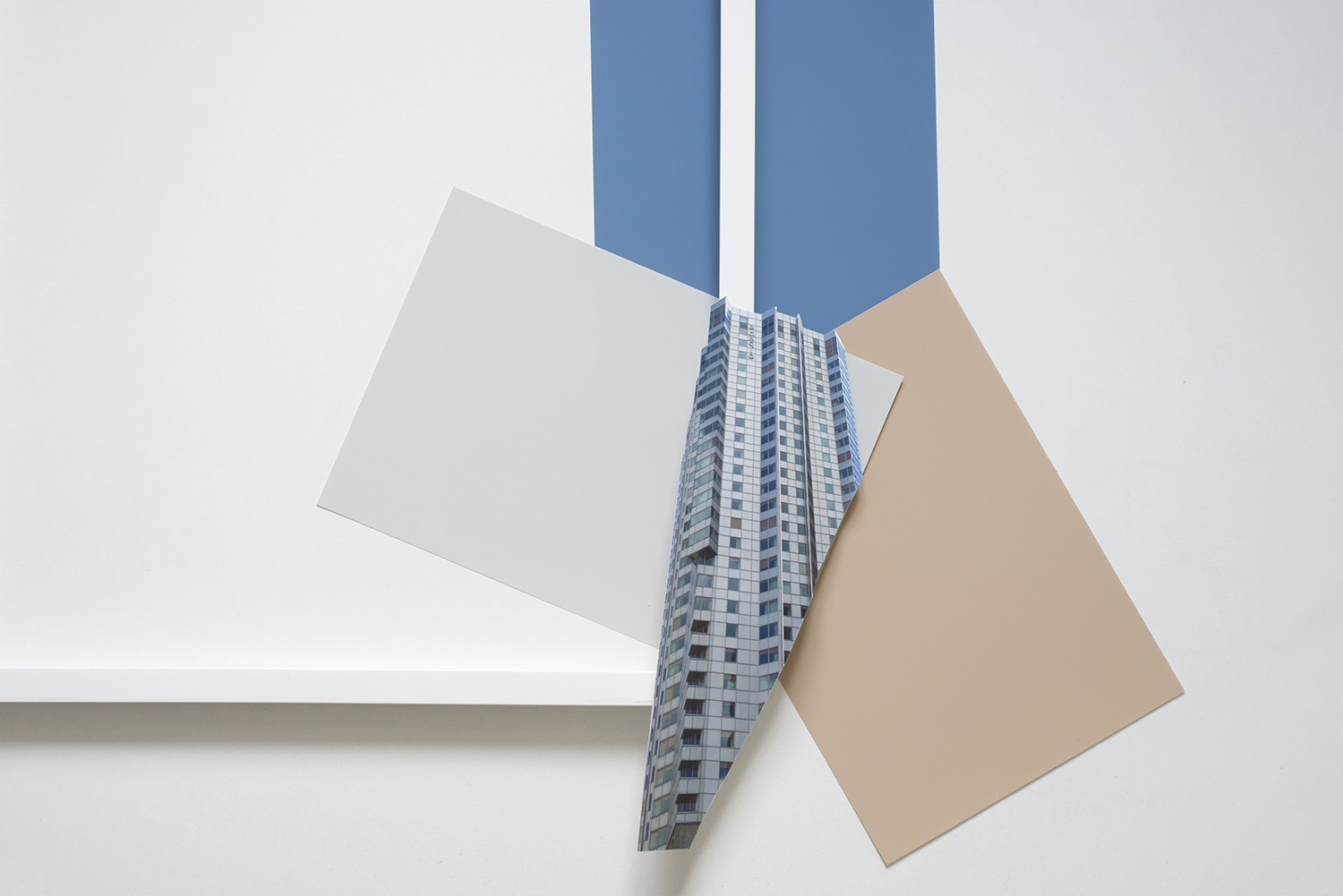
Palais de justice

URBAN COLLAGES

Florian SCHMITT WORK TEXT VITA CONTACT

URBAN COLLAGES

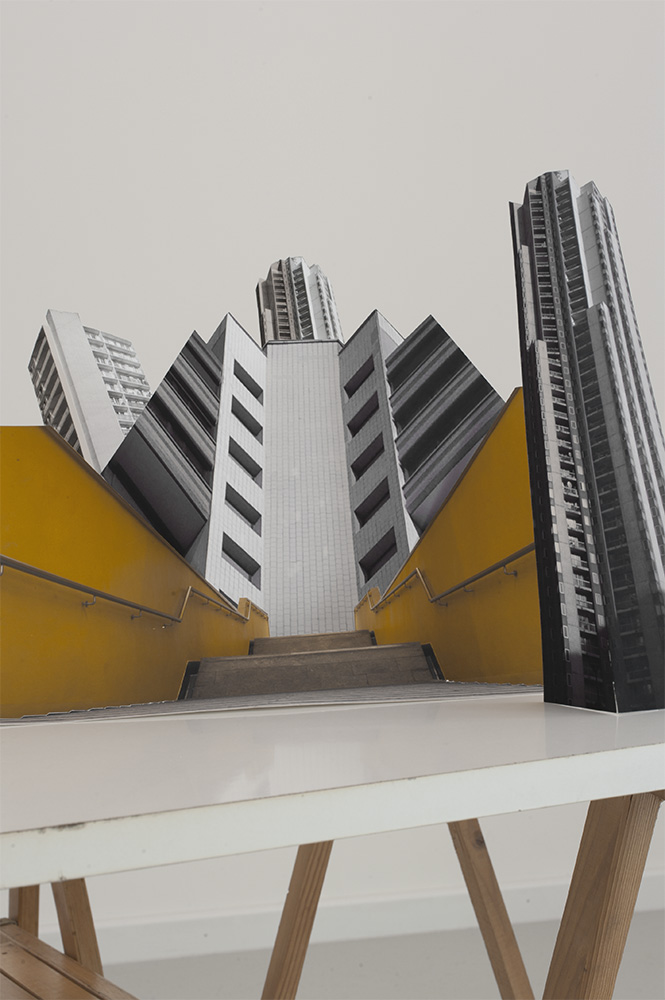
Une folie matrisée ? | 2021 pêle mele | 2017 | Paris |  90 x 60 cm Opéra | 2018 | 120 x 80 cm Palais de justice | 2018 | Paris | 80 x 110 cm
Rosa Parks | 2018 | 90 x 60 cm Place des Fêtes | 2018 | 65 x 80 cm Quartier de Batignolles | 2018 | 90 x 60 cm Grenelle pastel 01 | 2017 | Paris | 30 x 45 cm
Quartier de la gare  | 2018 | Paris |  50 x 50 cm Saint-Denis | 2017 | Paris | 90 x 60 cm La bouche de métro | 2015 | 79,85 x 120 cm

Paris is considered the birthplace of photography and one of the most photographed cities in the world. How do I perceive it? What do I look at? How can I photograph this city without repeating existing images? How can I create photographs that take me somewhere else?

Through "photographic notes," I create a personal visual archive. From there, I print certain images, cut them, fold them, and assemble them to construct a model, which I then photograph again. Although the result appears to be a digitally reworked photo, it is actually an entirely manual process. Only the shooting itself is done with a digital camera. In my practice, I start with the idea of a constructed photograph, which takes shape throughout the creative process. I use printed photos to create models and compose an image that resembles a collage or a trompe-l'œil style—in a way, an image within an image. Photography thus becomes a tool for construction for me.

As a flâneur and photographer, I have always perceived the city as a place of questioning. Documentary (architectural) photographs do not necessarily transport me elsewhere. However, it is important for me to incorporate them into my artistic process. I use landscapes and architecture as starting points to create photographic fictions.